The trigger was a failure: a fork arm broke off on one of the trucks. No one was injured, but the incident was serious enough to raise a question about the condition of the whole fleet. The logistics company decided to inspect its trucks using magnetic particle testing. The inspection covered 54 forklift trucks and 114 fork arms — some machines operate in a four-fork configuration.
Key Results
- 114 fork arms inspected across 54 trucks, with no truck out of service longer than its own inspection.
- Cracks found in 3 fork arms, belonging to 2 trucks.
- Affected trucks immediately withdrawn from service and their forks replaced.
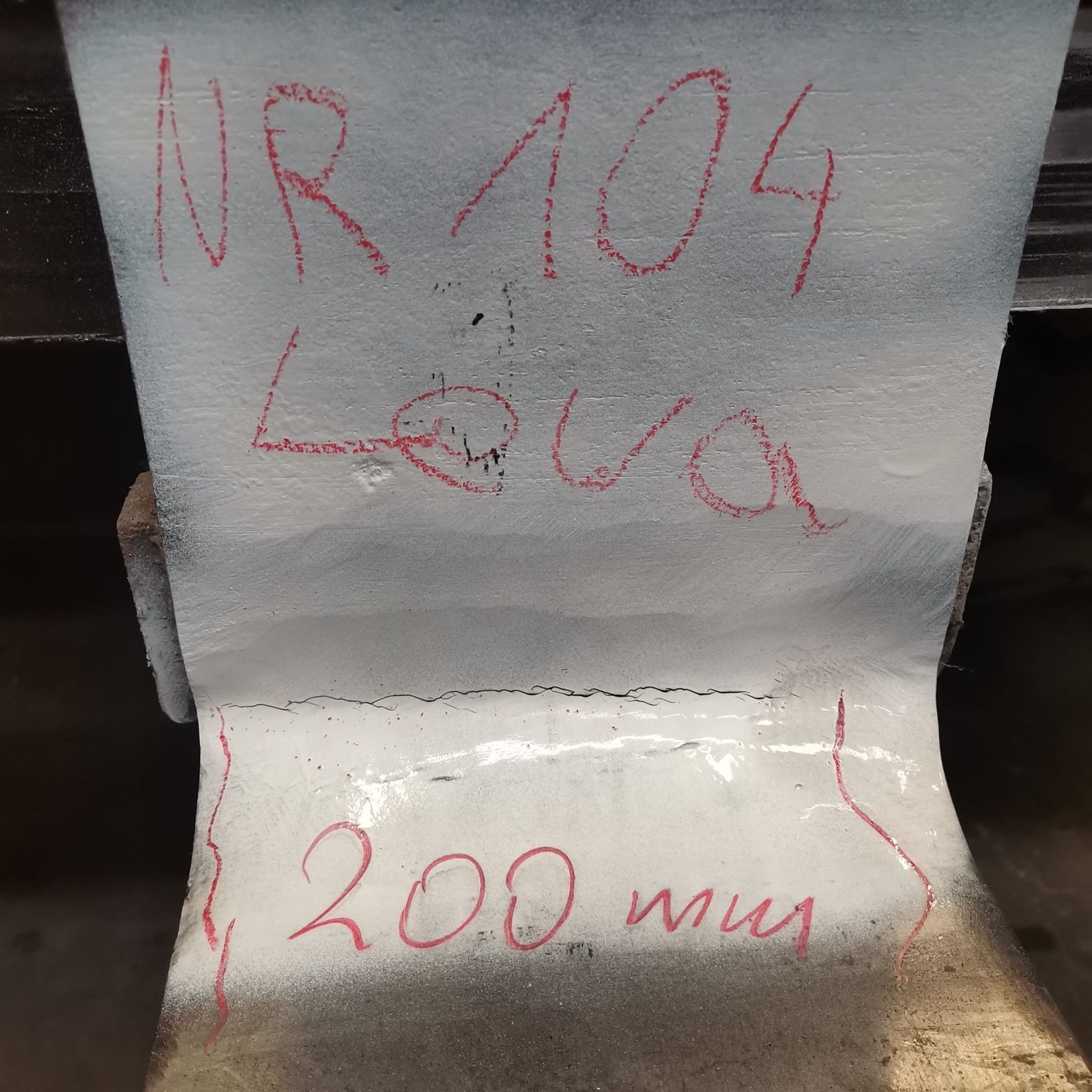
- Indications located on the heel radius — where fatigue cracks initiate most often.
- The client gained a documented review of fleet condition instead of decisions taken after a failure.
The Challenge: A Crack You Cannot See Until It Is Too Late
Forklift fork arms work under cyclic loading — lifting, setting down, travelling with a load. Stress concentrates at the heel radius, where the horizontal blade meets the vertical shank. That is where fatigue cracks initiate, and where they develop unnoticed for longest, often beneath dirt or paint.
The difficulty is that a fatigue crack gives no warning proportional to the danger it represents. For most of its life it is invisible to routine visual checks, and its development ends in sudden separation of a load-bearing component — with a load raised above floor level. After a fork arm broke on one truck, the client faced a question that could not be deferred: was this an isolated case, or did the problem extend across the fleet?
The organisational constraint was equally real. The fleet runs continuously, so the inspection could not mean immobilising trucks for long periods or dismantling assemblies.
The Solution: Magnetic Particle Testing, Contrast Technique
We applied magnetic particle testing (MT) to EN ISO 9934-1, using the contrast technique. The equipment comprised:
- an MR 56 magnetic yoke by MR Chemie,
- MR 76S magnetic powder,
- MR 72 white contrast background.
Surfaces were prepared by cleaning and degreasing, then coated with contrast paint against which dark indications become unambiguous. The method detects surface and near-surface discontinuities in ferromagnetic materials, and a portable yoke allows magnetisation directly on the truck, without dismantling.
One point on acceptance criteria is worth stating. The acceptance levels in EN ISO 23278 apply to welded joints, and fork arms are not welded joints — so the criterion was set by the client as the owner of the equipment in service: any crack is unacceptable. Agreeing this before work started removed any interpretation issues when assessing indications.

The inspection was organised around the warehouse. Trucks drove up in turn to a designated inspection point, where testing was carried out and the result given immediately. No truck was out of service for longer than its own inspection.
The Results: Three Cracked Fork Arms Withdrawn Before the Next Failure
Of the 114 fork arms inspected, three showed linear indications on the heel radius. Their shape and location pointed unambiguously to cracks rather than false indications arising from geometry or surface finish. The damaged arms belonged to two trucks.
Both trucks were immediately withdrawn from service on safety grounds and their fork arms replaced. The remaining 111 arms passed without indications, which allowed the client to keep the fleet running and avoid preventive replacement of components that did not need it.
The most important outcome, however, is a different one. Before the inspection the client knew only that one fork arm had broken, with no basis for judging the scale of the hazard. Afterwards they held a documented review of the inspected fleet and could make decisions on evidence rather than assumption. The failure stopped being an event to react to and became the starting point for systematic monitoring of equipment condition.
Client Quote
“After a fork arm broke on one of our trucks, we could not assume it was a one-off. Magnetic particle testing gave us the answer within days and without taking the warehouse out of operation — the trucks simply drove up to the inspection point in turn. Three fork arms turned out to be cracked and we replaced them straight away. The rest of the fleet came back clean, so we know we are not replacing equipment for the sake of it. That is the real difference between guessing and knowing.”
Do you operate a forklift fleet or other load-bearing equipment? Get in touch — we will inspect it without stopping your warehouse.